Home About Practice FAQ Writing Tools Contact

eCourts Case Status Checker

Fast, mobile-friendly case status search for Delhi High Court and district courts on the eCourts system. Search by CNR number or advanced filters, then see hearing dates, orders, and plain-English guidance on what the status usually means. Verify critical dates directly at ecourts.gov.in.

CNR format: 16-character code on your cause list, order copy, or court receipt.
Example: DLDT01-000123-2024
Remove spaces and hyphens if the form doesn't accept them.
Full-text search across 24+ crore cases with advanced filters. Leave fields blank to broaden results.
Searches across case details and orders. If you type a person/company name and leave the dedicated party fields blank, it'll also be matched against petitioner/respondent names.
Leave blank to search all courts nationwide.
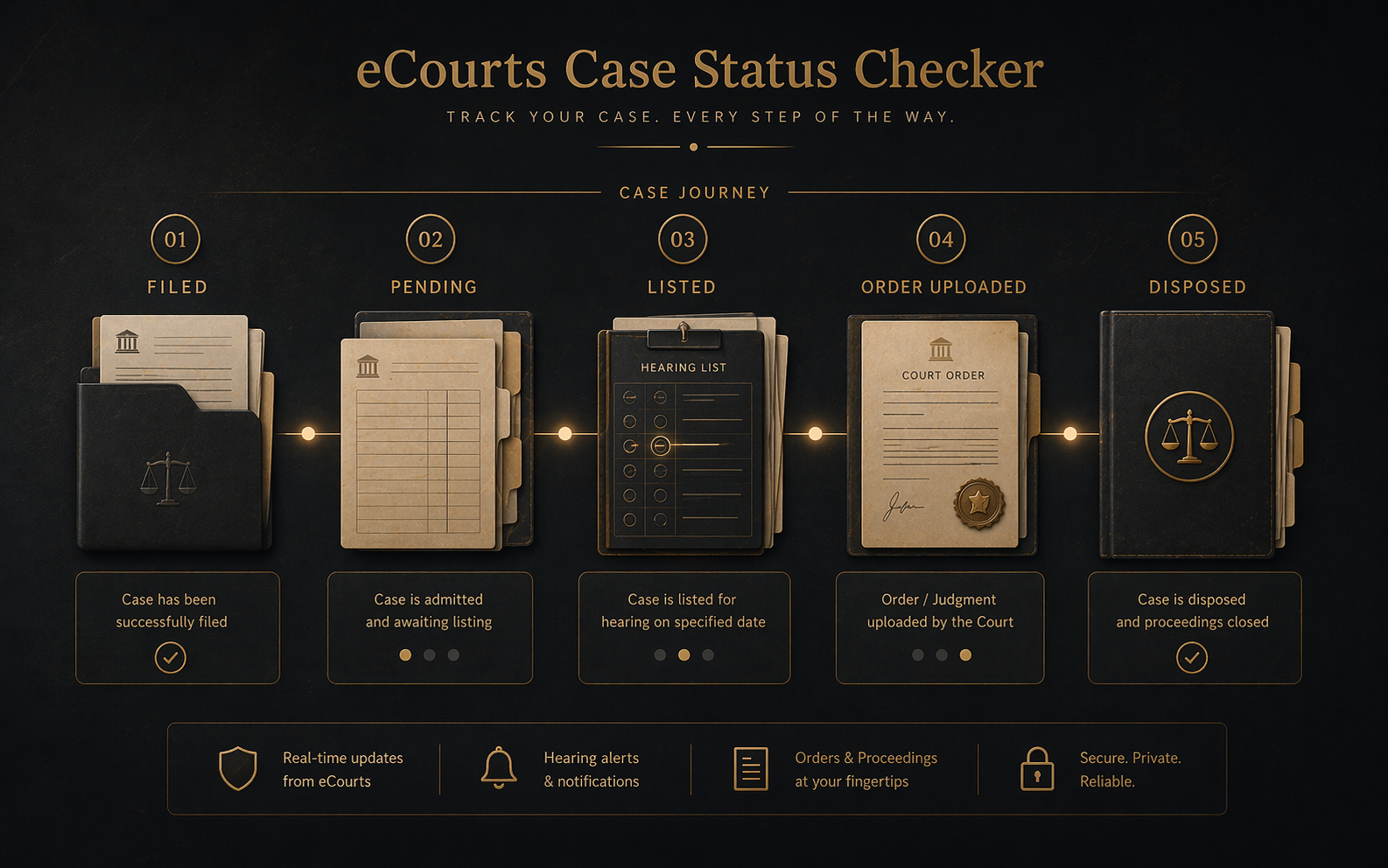
Editorial case journey graphic showing filing, pending, listed, order uploaded, and disposed stages in a litigation lifecycle.
Enter CNR or Name
Use the 16-char CNR from your filings for the most precise lookup, or switch to advanced search for names, advocates, judges, and date filters.
Live eCourts Data
Results are fetched in real time from eCourts — the same data source as ecourts.gov.in — covering 26+ crore cases.
Plain-Language Context
Each result includes a legal context box explaining what the status means and what typical next steps look like.
Built for mobile screens
Designed to be easier to use on a phone than the standard court portals, especially when all you need is a quick CNR lookup.
Explains the status in plain English
The official portals show the record. This page also explains what pending, disposed, admission, stay, and passed dates typically mean.
Connects the next step
Once you find the record, you can move directly to cause-list checking, order review, or a short case assessment if the status raises a legal question.
What is a CNR number and where do I find it?

CNR (Case Number Record) is a unique 16-character alphanumeric identifier assigned to every case in the eCourts system. You'll find it on the top of cause lists, order copies, and any receipt from the court filing counter. It looks like: DLDT01-000123-2024.

Does this cover High Court cases?

Yes — the eCourts platform covers district courts and several high courts integrated with the national system. Some high courts have separate portals (e.g., Delhi High Court's official website). For Supreme Court matters, use sci.gov.in directly.

What should I do if my next date has passed with no order?

Cases are routinely adjourned and the next date may not update immediately in the system. Check the cause list for the relevant court and date at ecourts.gov.in. If the matter is urgent or you suspect something has been missed, reach out to your advocate immediately.

Is this data official or verified?

Data is sourced from the eCourts API which aggregates from official court records. However, always verify critical hearing dates and orders directly at ecourts.gov.in or with your advocate. This tool does not constitute legal advice.

What is a CNR number and where do I find it?

The CNR is the easiest and most reliable way to find your case. It appears on cause lists, order sheets, filing receipts, and often on lawyer communications. If you only have the case number, you can still use the official eCourts portal to identify the CNR and then come back here for a cleaner lookup.

How to check case status if you do not have the CNR

Use the Advanced Search tab if you know some combination of these details:

  • party or litigant name
  • advocate name
  • judge name
  • filing date range
  • court code, if known

What common status labels usually mean

Pending
The case is still live before the court. Track the next hearing and make sure filings are complete.
Disposed
The court has concluded the matter. The next practical step is usually to obtain the order copy and consider compliance or appeal.
Admission / Fresh
The court is seeing the matter at an early stage and may decide whether notice should issue or interim relief should be considered.
Date Passed
If the listed next date has already passed, the record may simply not have updated yet. Check the cause list and orders before assuming nothing happened.

What to do if your case status has not updated for months

Delays in the displayed status do happen. Before assuming the matter is dormant, check:

  • the latest cause list for the court
  • whether a fresh order has been uploaded
  • whether the next date was changed in open court
  • whether your advocate has a more recent order-sheet update

If the record shows a hearing coming up, use the cause list checker next. If it shows a disposal, uploaded order, or a status you do not understand, move to a short case assessment.

Assess Your Case